Blue Yeti
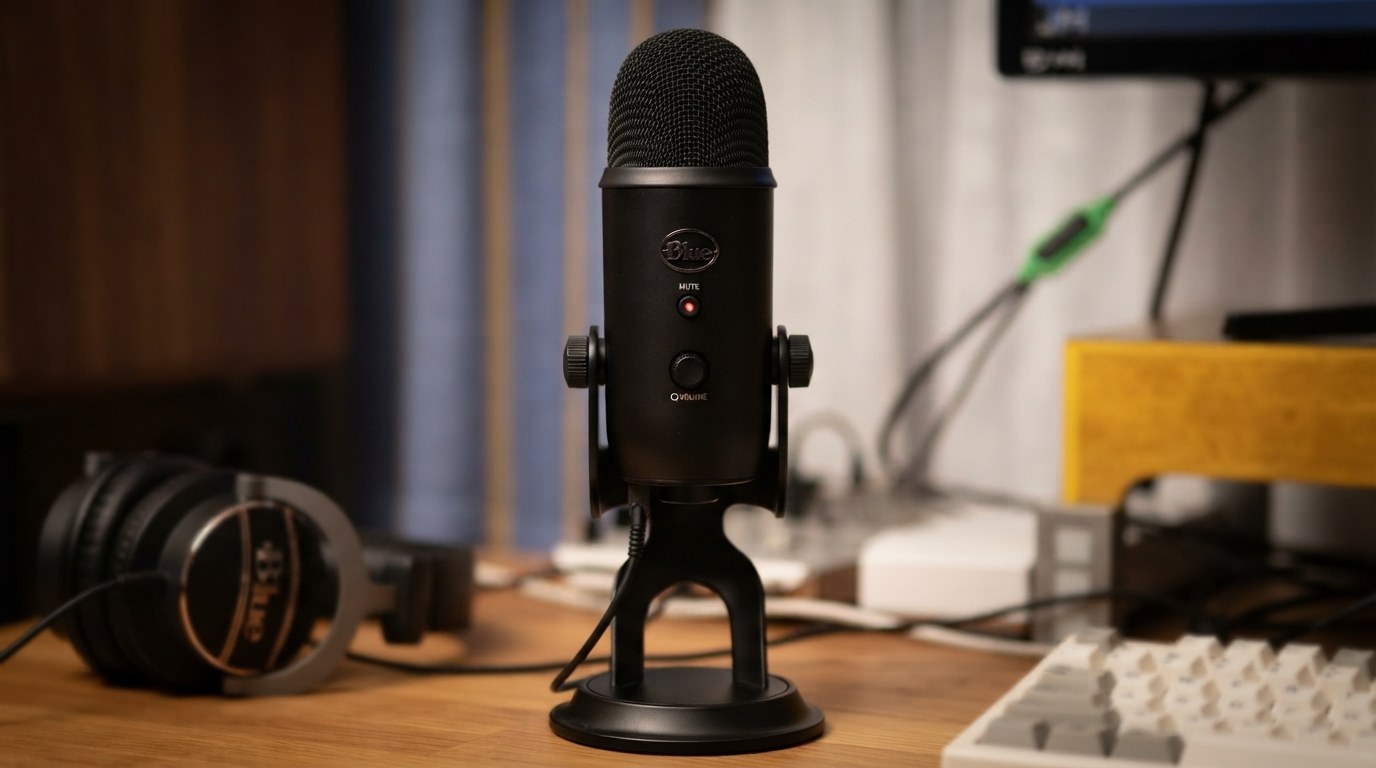 Illustration of the product
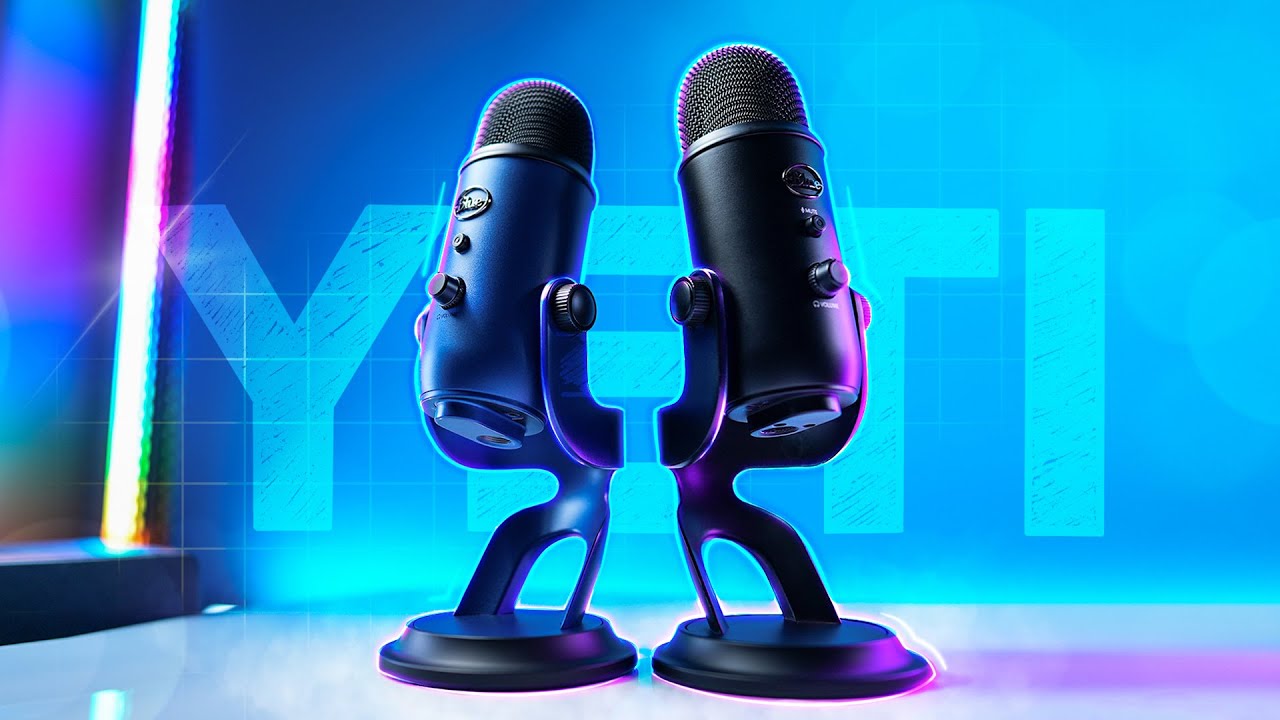 ▶ From a video review of this product
Check price on Amazon →
▶ From a video review of this product
Check price on Amazon →
affiliate link · goes to an Amazon search for this product
- Output
- USB only
- Capsule
- Condenser
Why it ranks here. The most-owned USB mic on earth, with a decade of owners, four pickup patterns and plug-in simplicity nobody disputes. A professional producer calls it an 80/20 mic that gets you more than 80 percent there when placed correctly in a treated space with a cheap pop filter, one owner has never thought of needing another mic, and a field recordist trusts it after two days in a jeep in tropical humidity.
It hears everything in the room, rings like a bell when touched, and buzzes for some. Newer units made since Logitech took over draw static complaints, two in a row for one owner, and a loose USB connector. A podcaster eight years in says complainers need to treat their room or switch to a dynamic, and audio people think there are better options at the price.
What owners like
- An 80/20 mic, says a producer
- Four pickup patterns
- A decade of owners
What owners complain about
- Hears the whole room
- Static on newer units
- Better options at the price
“I just wanted to say that I have more than a little professional production experience, and the Blue Yeti is what I would call an 80/20 mic. The Yeti will get you more than 80% there when placed correctly in an acoustically treated space for most people. Placement and treatment can be close to free cost-wise. Also, add a $10 pop filter, and you'll be fine.” — YouTube comment · @linda_lawson · 2022-04-21
5 positive · 5 mixed · 3 negative · 13 voices · ✓ all 13 linked to source
Read all 13 quotes (13 voices)
-
To me, the reason why the Yeti is going to remain a popular choice forever, is because it's so frigging darn hard to actually figure out what to buy. The Yeti just 'works' and for many budget buyers, that's all they know. The common person isn't going to know much about microphones. You can tell a person that 'there are many better alternatives', but without knowing what those are, they will just simply default to Blue Yeti.
-
I just wanted to say that I have more than a little professional production experience, and the Blue Yeti is what I would call an 80/20 mic. The Yeti will get you more than 80% there when placed correctly in an acoustically treated space for most people. Placement and treatment can be close to free cost-wise. Also, add a $10 pop filter, and you'll be fine.
-
bought my yeti for $100 and haven't thought of needing a different mic ever since. I have it on a $60 boom arm and, with some audio adjustment, the microphone sounds gorgeous to me..
-
8 years ago I started my podcast with an OG Yeti. I have since graduated to more prosumer gear. Most folks who complain to me about the Yeti are annoyed that it "picks up everything" - including every bit of room noise. It doesn't make the mic bad, it just means that they need to do some treatment to their space OR switch to a dynamic.
-
As someone who loves the current Blue Yeti, when I first went to get one, the one I bought was also broken. Not quite as egregiously as that, but rather the USB mini connector at the bottom was noticeably loose and in certain positions would just register as not plugged in similar to a short with a really old audio cable... seems like a bit of a red flag that Blue's current QC might not quite be up to snuff.
-
Got a Yeti for around $100, which I think is a great price for what it is. It's well-built and easy to use, and having the choice of 4 different patterns for different use cases is a big plus for those who can't or don't want to spend the extra money for multiple mic setups.
-
I have a Yeti and a G-Track Pro, paid $100 for both... I'd say it suffers from a lot of low-end noise (such as you touching it, desk noises, typing, etc.) I have mine on an arm (no isolation) and I don't get any keyboards or clicks but I have the gain as low as it can go... Give it those ideal conditions and it's hard to beat.
-
I work and make recordings in very out of the way places in South East Asia... And when I got the Blue, it was the one that blended the absolute assurance that two days in a jeep, and hot humid weather over 40 degrees, along with the accidents that happen in the field, were still going to leave me with working equipment.
-
I've used a yeti to years, man its a bit of work to get working nicely... that random buzzing in the background sometimes, sometimes needs to be replugged in, even with a new cable the mic wouldnt get recognised as a blue yeti (advanced USB device instead)... It's SO heavy too. and like when u pick it up and touch it, its so sensitive! DONK DINK DONK
-
Has Blue Yeti gone to shit since Logitech bought them? I have an older Yeti from before they were bought out and it works. Recently I was getting another one and the new one is generating static noise. All I did was disconnect my older one and connected the new one to test it using the same computer and same cable... I got a 2nd one and it does the same thing.
-
It's become popular to dunk on the Yeti, but it's still a good little microphone for not much money, and it has a really low barrier to entry. Other mics may make you sound better, but they're not going to be a magic bullet - you still have to consider the basics of background noise, room echo and good microphone technique.
-
IMO it doesn't actually sound bad. It does sound a bit compressed, which is probably why audio noobs like it while audio nerds find it undesirable since they typically want to do their own processing... most audio nerds know that there are better options on the market in that price range. They see people who own a Blue Yeti as people who only do surface-level research before buying a product.
-
Blue yeti will always be a good choice, the mic I'm using is the quadcast 2 s cause I just liked the model and it's nice for streaming in case you game too.